Explore the Gemini Constellation
Discover the celestial twins of the zodiac, symbolizing versatility and intellect. Gemini shines bright in the night sky as a beacon for curiosity and growth.
Core Gemini Personality Traits & Duality
Core Traits
- Adaptable – Easily adjusts to new situations and challenges.
- Curious – Eager to learn and explore diverse topics.
- Communicative – Skilled in expressing thoughts clearly and engagingly.
- Energetic – Maintains high enthusiasm and motivation daily.
- Intellectual – Prefers thoughtful analysis and deep conversations.
- Witty – Sharp sense of humor and quick thinking.
Dual Nature Analysis
Geminis embody duality, balancing two distinct sides within their personality. This duality allows flexibility but can create internal conflict.
They often switch between moods and ideas, keeping relationships and projects fresh but sometimes unpredictable.
Their dual nature fosters versatility and innovation but requires mindful self-awareness to maintain consistency.

Dynamic Communication & Social Bonding
Effective communication styles are key to fostering meaningful social relationships. Explore how dynamic interaction patterns strengthen bonds and create lasting connections.

Adaptive Communication Styles
Understanding different communication styles—assertive, passive, or dynamic—enhances interpersonal harmony. Flexibility promotes trust and reduces misunderstandings.
Building Social Bonds
Social bonding thrives on authentic conversations, emotional support, and shared experiences. Nurturing these elements strengthens network resilience and engagement.
Love & Intimate Relationships: Romantic Traits, Emotional Needs, and Myth Busting

Core Romantic Traits
Understanding your partner’s romantic traits helps build deeper trust and connection. Traits such as empathy, communication style, and affection patterns reveal unique relationship dynamics.
Emotional Needs in Intimacy
Emotional security, mutual respect, and vulnerability shape lasting intimacy. Prioritizing these needs enhances emotional bonding.
Common Myths Debunked
Addressing misconceptions about love myths improves realistic expectations and healthier partnerships. Not all romantic challenges are signs of incompatibility.
Workplace Strengths & Career Suggestions
Identify Your Core Strengths
Understanding your workplace strengths enhances career growth. Focus on communication, adaptability, and problem-solving skills to excel.
Tailored Career Suggestions
Align your job choices with your passions and strengths. Consider fields like marketing, consulting, or technology based on your profile. For in-depth advice on advancing your career and money, explore our guides.

Communication
Effective communication drives collaboration and leadership opportunities.
Adaptability
Flexibility in dynamic environments increases career resilience and growth.
Problem Solving
Analytical thinking unlocks innovative solutions and drives business success.
Continuous Learning
Commitment to growth keeps you competitive and adaptable in any field.
The Role of Mercury: Astrological Insight and Symbolism

Mercury symbolizes communication, intellect, and mental agility in astrology. Known as the messenger planet, it governs how we think, learn, and express ideas.
It influences speech, writing, and commerce, highlighting adaptability and quick decision-making. Mercury's energy promotes curiosity and information exchange.
Astrologically, Mercury rules Gemini and Virgo, shaping analytical skills and versatile thinking essential for success in mercury sign, business, and relationships.
Symbolism and Meaning
Mercury’s swift orbit represents rapid thought processes and the power to adapt. It embodies intellect, curiosity, and the exchange of ideas, vital for problem-solving and creativity.
Astrological Impact
In natal charts, Mercury’s placement reveals communication styles and cognitive strengths. Its retrograde phases challenge clarity but offer growth through reflection.
Astrological Reminders & Personal Growth Tips
Daily Guidance for Self-Improvement
Harness astrological insights to unlock your potential. Each day brings unique challenges and solutions tailored to your sign.
Use personalized reminders to cultivate mindfulness, resilience, and confidence in your daily decisions.

Challenge: Overthinking
Gemini’s natural curiosity can lead to overanalyzing. Practice grounding techniques and focus on actionable steps.
Solution: Mindful Journaling
Capture your shifting thoughts in writing to create clarity and reduce mental clutter. Review insights weekly to enhance your personal growth journey.
Tip: Stay Adaptable
Embrace change effortlessly by setting small, flexible goals. Adaptability strengthens spiritual growth over time.
What is the Gemini Constellation?
I’ve always viewed the Gemini twins constellation as a cornerstone of the northern hemisphere's night sky. Representing the legendary brothers Castor and Pollux, this constellation is a must-see for any stargazer looking to master the winter sky.
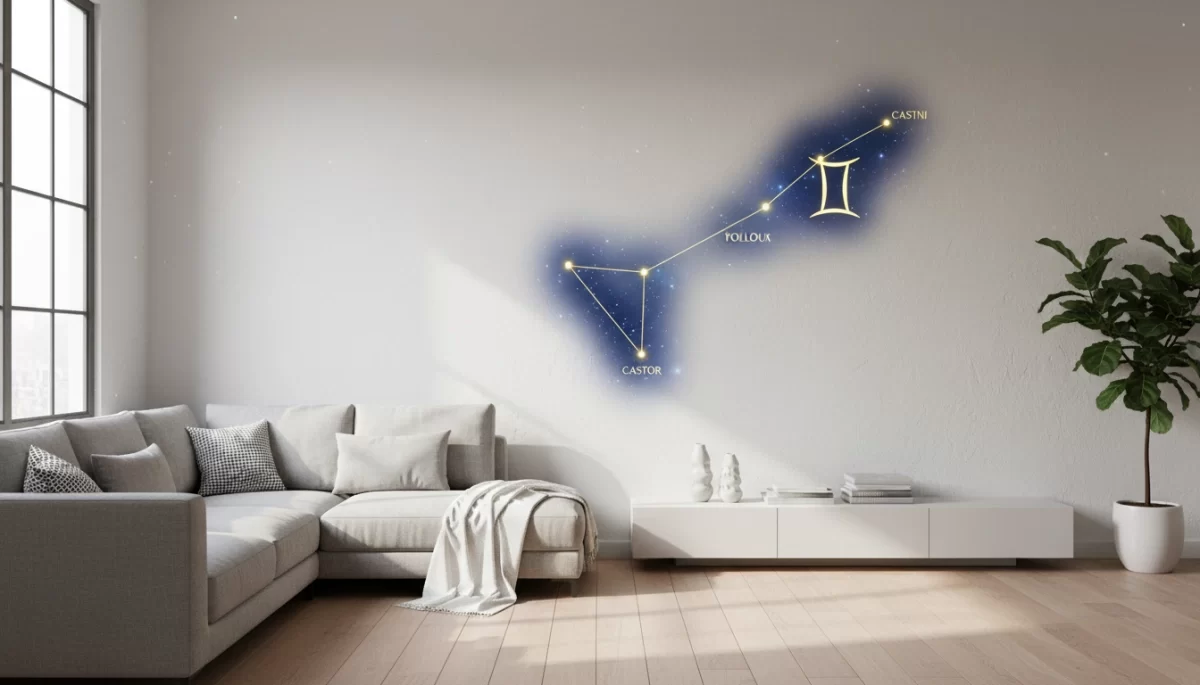
Size, Ranking, and Coordinates
Understanding the scale of Gemini helps in mapping out your nightly observations. It is a mid-sized constellation that holds a significant position along the ecliptic:
- Total Size: 514 square degrees.
- Global Ranking: 30th largest out of the 88 recognized constellations.
- Celestial Coordinates: Positioned at approximately 7h Right Ascension and +20° Declination.
- Hemisphere: While it is a staple of the Gemini northern hemisphere, it remains visible from most inhabited regions on Earth.
Peak Visibility and Best Viewing Times
To catch the "Twins" at their highest point, timing is essential. While the constellation remains visible for a large portion of the year, these are the optimal windows for observation:
- Best Months: January, February, and March.
- Peak Viewing: Late February at approximately 9:00 PM local time.
- Sky Location: High overhead in northern latitudes, situated between Taurus to the west and Cancer to the east.
Using a clear Gemini star map is the most reliable way to pinpoint the twins during these peak winter months, ensuring you don't miss one of the most symmetrical patterns in the heavens.
Meet the Stars: Castor and Pollux

When I look up at the Gemini twins constellation, the first things that stand out are the two bright "heads" of the twins. While they look like a matched pair from Earth, they are actually very different celestial bodies with unique characteristics.
Pollux: The Brightest Star in Gemini
Pollux (Beta Geminorum) officially holds the title of the brightest star in the constellation. It is an orange-hued giant located about 34 light-years away. Interestingly, it is brighter than Castor, despite being labeled "Beta." Exploring these celestial markers provides a deeper look into the traits of the Gemini zodiac sign and how these stars have influenced sky-watchers for centuries.
The Castor Multiple Star System
Castor (Alpha Geminorum) is a fascinating piece of cosmic engineering. While it appears as a single point of light to the naked eye, it is actually a sextuple system—six stars orbiting a common center of mass.
- Visual Binary: A telescope reveals two bright white stars (Castor A and B).
- Red Dwarf Pair: A third, much fainter component (Castor C) orbits the main pair, and all three are themselves spectroscopic binaries.
Notable Secondary Stars
Beyond the famous duo, the Gemini star map is composed of several other significant stars that form the bodies of the twins:
| Star Name | Designation | Description |
|---|---|---|
| Alhena | Gamma Geminorum | A bright white star marking the "foot" of Pollux. |
| Wasat | Delta Geminorum | Located near the center; famous as the location where Pluto was discovered. |
| Mebsuta | Epsilon Geminorum | A rare yellow supergiant representing the knee of Castor. |
| Tejat Posterior | Mu Geminorum | A red giant located at the foot of Castor. |
I find that focusing on these secondary stars makes it much easier to trace the full stick-figure shapes of the twins in a dark sky. Alhena, in particular, is the third-brightest star in the group and is a great reference point for identifying the "feet" of the constellation.
The Mythology of the Dioscuri
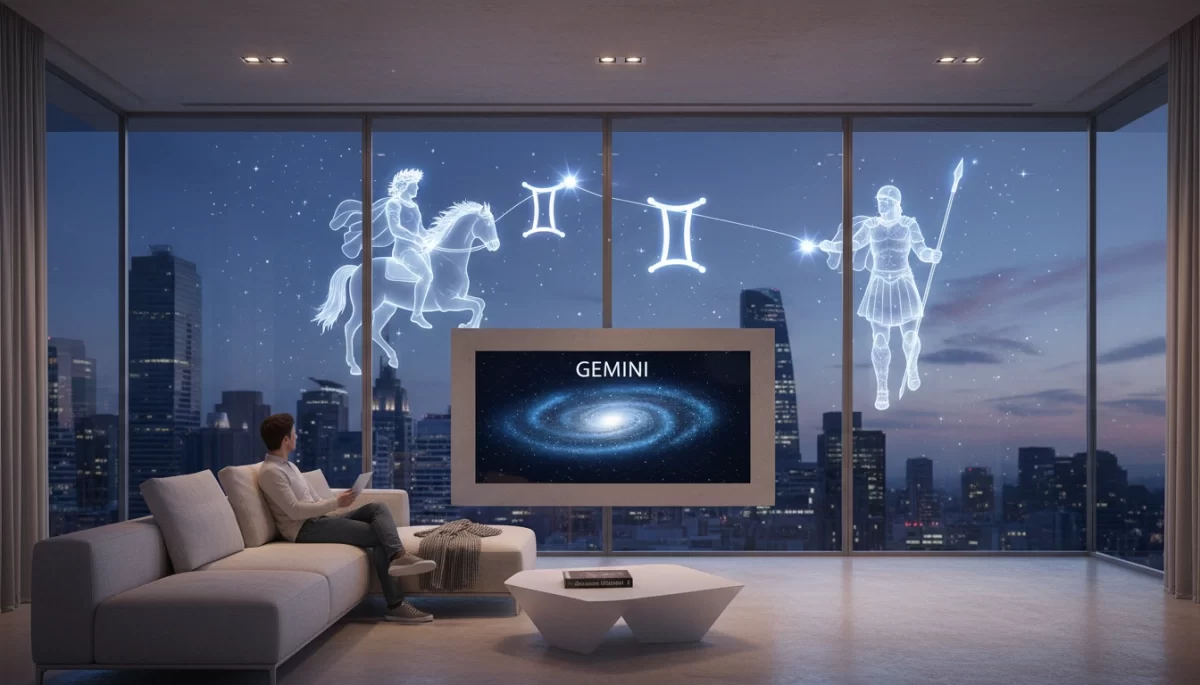
The story behind the Gemini twins constellation is a timeless tale of brotherly devotion. In Gemini mythology Greek lore, Castor and Pollux—collectively known as the Dioscuri—represented the bond between mortality and divinity. I’ve always found it fascinating how Zeus placed the Castor and Pollux stars in the heavens to ensure the brothers would never be parted by death, allowing them to share immortality.
Global Perspectives on the Twins
While the Greek legend is the most prominent, the "twin" motif appears across various ancient civilizations, proving that the Dioscuri twins myth has universal appeal:
- Babylonian: They were known as the "Great Twins" (Meshlamtaea and Lugalirra), acting as guardians of the gate to the underworld.
- Roman: Romans revered them as patron deities of sailors and the cavalry, often appearing on ancient coinage.
- Egyptian: Some interpretations associated these stars with two sprouting plants or a pair of goats.
The placement of Gemini in the sky is pivotal, marking the transition from the light-hearted energy of the twins toward the seasonal shift found in the Cancer zodiac sign. This celestial positioning reinforces the theme of duality that defines the constellation's legacy, bridging the gap between the physical and spiritual worlds.
Gemini Deep Sky Objects and Celestial Phenomena
Beyond the main stars, the Gemini constellation is home to some of the most impressive deep sky objects and annual events in the night sky. I find that these targets are perfect for both casual observers and serious astrophotographers looking to capture the beauty of the northern hemisphere.
Messier 35 and Notable Nebulae
- Messier 35 Cluster: This massive open cluster is the crown jewel of Gemini. It is visible to the naked eye under perfect conditions but truly shines through binoculars, appearing as a dense field of glittering diamonds.
- Eskimo Nebula (NGC 2392): A striking planetary nebula that looks like a person's head inside a parka. Its complex gas layers make it a top priority for those using mid-sized telescopes.
- Jellyfish Nebula: This faint supernova remnant is located near the "foot" of the twin Castor. Much like the stars of neighboring zodiac signs like Taurus, these celestial bodies provide a beautiful map for navigating the winter sky.
Catching the Annual Geminid Meteor Shower
The Geminid meteor shower is arguably the most reliable annual meteor display. It peaks every mid-December when Earth passes through the debris trail of the asteroid 3200 Phaethon.
| Feature | Details |
|---|---|
| Peak Visibility | December 13th and 14th |
| Meteor Count | Up to 120 meteors per hour |
| Appearance | Bright, fast, and often multi-colored |
| Viewing Method | Naked eye (no equipment needed) |
I recommend heading to a dark-sky location away from city lights to fully appreciate this celestial show. The meteors appear to radiate from the star Castor, making them easy to
- Messier 35 Cluster: This massive open cluster is the crown jewel of Gemini. It is visible to the naked eye under perfect conditions but truly shines through binoculars, appearing as a dense field of glittering diamonds.
- Eskimo Nebula (NGC 2392): A striking planetary nebula that looks like a person's head inside a parka. Its complex gas layers make it a top priority for those using mid-sized telescopes.
- Jellyfish Nebula: This faint supernova remnant is located near the "foot" of the twin Castor. Much like the stars of neighboring zodiac signs like Taurus, these celestial bodies provide a beautiful map for navigating the winter sky.
How to Find the Gemini Constellation in the Night Sky
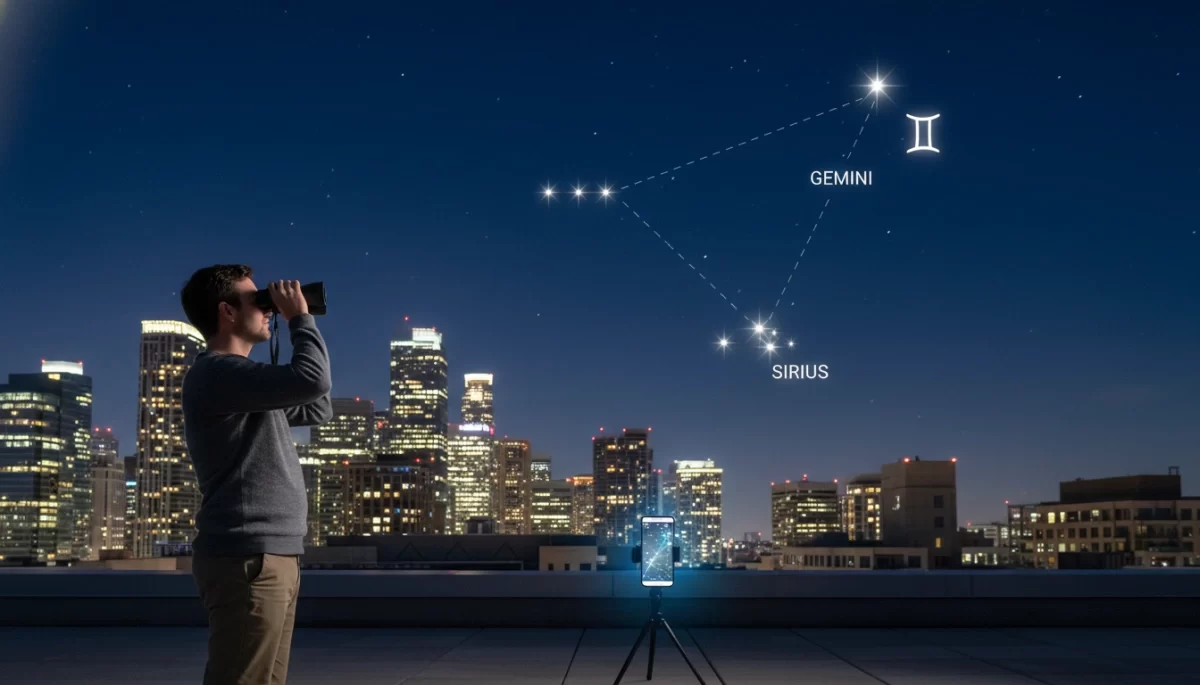
Locating the Gemini twins constellation is a straightforward task once you know how to use the surrounding landmarks. In the northern hemisphere, the easiest way to start your search is by looking for the most famous winter constellation: Orion.
Using Orion’s Belt as a Celestial Pointer
To find the twins, I suggest using the "line-of-sight" method from Orion. This celestial pointer technique is reliable even in areas with moderate light pollution.
- The Orion Line: Find the three stars of Orion’s Belt.
- The Path: Draw an imaginary line from Rigel (Orion’s foot) up through Betelgeuse (Orion’s shoulder).
- The Target: Continue that line further across the sky until you hit the two bright Castor and Pollux stars, which mark the heads of the twins.
Star-Hopping from the Hyades and Pleiades
If you are already familiar with the bull of Taurus, you can use a Gemini star map to hop over from the Hyades or Pleiades clusters. Simply look to the upper left (east) of these clusters. Gemini will appear as two nearly parallel lines of stars extending away from the bright duo of Castor and Pollux.
Essential Viewing Tools
Depending on your goals, you can choose different ways to observe this section of the sky. While the constellation is prominent to the naked eye, a little help goes a long way.
| Tool | Best Use Case |
|---|---|
| Naked Eye | Identifying the main "stick figure" shape and the two lead stars. |
| Binoculars | Observing the color contrast between the stars and finding star clusters. |
| Telescope | Splitting the multiple-star system of Castor or viewing distant nebulae. |
| Astronomy Tools | Using digital astrology tools to track the constellation's movement throughout the night. |
How to find Gemini constellation becomes second nature once you recognize its proximity to the Milky Way. On a clear night, the twins stand tall above the horizon, offering a perfect entry point for amateur stargazers.
The Gemini Zodiac Connection and Astrology

In our Gemini Constellation Overview, it is essential to look at how these stars shape the astrological world. As a prominent Gemini zodiac constellation, it serves as the celestial foundation for those born under the sign of the twins. We find that the energy of this constellation is deeply rooted in the Gemini air element mutable nature, which emphasizes adaptability and constant movement.
The Influence of Mercury and Duality
The Gemini twins constellation is ruled by Mercury, the planet of communication and speed. This connection defines the core characteristics associated with the sign:
- The Air Element: Focuses on logic, social connection, and the exchange of ideas.
- Mutable Quality: Represents the end of a season, making the energy flexible and restless.
- Duality: The twins symbolize the bridge between the inner self and the outer world.
We offer unique insights into how these celestial patterns affect all zodiac signs and their individual paths. Understanding the Zodiac sign Gemini dates and their link to these specific stars helps clarify why communication and curiosity are so central to this sign's identity. The duality found in the stars reflects a human need to see both sides of every story, keeping the spirit of the "twins" alive in our daily lives.
FAQ: Gemini Constellation Overview
What is the best time of year to see the Gemini twins constellation?
The peak viewing season for Gemini in the northern hemisphere is during the winter and early spring. From January through March, the constellation sits high in the sky during the evening. While you can spot it as early as November, mid-winter provides the clearest views of the Castor and Pollux stars directly overhead.
Are Castor and Pollux actually related stars?
Though they look like twins from Earth, they are not physically related. They are what astronomers call an optical double:
- Pollux: The brightest star in Gemini, located about 34 light-years away. It is an orange giant.
- Castor: A complex multiple star system sitting roughly 51 light-years away. They appear close together only because of our line of sight from Earth. Understanding these differences helps when exploring the unique traits of the air signs, much like comparing the social dynamics of Aquarius compatibility with the dual nature of Gemini.
How do I photograph the Geminid meteor shower?
Capturing the Geminid meteor shower requires patience and the right gear. Since this shower peaks around mid-December, preparation is key:
- Use a Tripod: Essential for steady, long-exposure shots.
- Wide-Angle Lens: Aim for a focal length between 14mm and 24mm to capture as much of the sky as possible.
- Manual Settings: Set your aperture to its widest (lowest f-number) and use a high ISO (1600–3200).
- Long Exposure: Use shutter speeds of 15 to 30 seconds to catch the streaks.
Can I see Gemini deep sky objects with the naked eye?
While the main stars are bright, most Gemini deep sky objects like the Messier 35 cluster require binoculars or a small telescope for a clear view. Under very dark skies, M35 may appear as a faint, fuzzy patch, but a telescope reveals its true "sparkle." Just as you might study Sagittarius compatibility to understand deep relational connections, using the right tools for stargazing reveals layers you can't see at first glance.
 English
  French
  Japanese
  Korean